

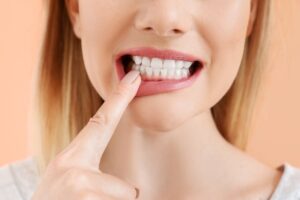
Within the human body, no material is stronger than enamel, the outside layer of teeth. This ultra-thin shield, unlike bones, cannot heal itself, and yet, after baby teeth have come out, you get just one set to last your entire lifetime. How can enamel last that long? What is it made of? What can make enamel prematurely fail or wear down? What can you do to help your natural teeth go the distance? To learn the answers, keep reading the information below.
How Does Tooth Enamel Work?
Using advanced imaging technology, scientists have found that tooth enamel has unique and complex orientation that specifically helps it avoid deep cracking and breaking for as long as possible. Instead of being perfectly aligned, the micron-length, crystal-like rods of a substance called hydroxyapatite that make up enamel are slightly rotated from each other, which means that damage stops at or near the top layer of enamel. This orientation of the rods prevents worse cracking.
How Does Tooth Enamel Get Worn Down or Break?
Although enamel is designed to last a person’s whole life and is the strongest material in the human body, it is not indestructible or impossible to wear down. In fact, small things you do every day could contribute to the overall downfall of your natural teeth. For example, if you do the following regularly, your tooth enamel may become thinner sooner than anticipated:
- Consume too much sugar.
- Chew on hard objects like ice or popcorn kernels.
- Bite on inedible objects like pens or pencils.
- Try to open packages or tear things with your teeth.
- Brush your teeth too hard.
After years of repetition, your teeth may weaken to the point where they break more easily, feel more sensitive, or succumb to decay.
How Can Tooth Enamel Be Preserved?
In addition to avoiding bad habits that can damage your enamel, you need to maintain smart and healthy choices in your lifestyle. The most important of these are as follows:
- Brushing with a soft-bristled toothbrush twice every day.
- Flossing once each day.
- Visiting the dentist at least twice each year for a checkup and cleaning.
- Eating food rich in nutrients like calcium, Vitamin D, and phosphorus to help mineralize teeth.
- Using fluoride toothpaste (with fluoride mouthwash if you wish) to prevent cavities.
- Wearing a mouthguard when you play
Although crowns and other dental restorations can address damaged enamel, do your best to preserve what you have. Through making smart choices, and avoiding poor ones, your tooth enamel can remain strong from the moment they erupt in your childhood until the last day of your life.
About the Practice
Williamsburg Dental has helped Lincoln patients keep their smiles healthy and strong for many years both through dental repairs and through prevention. With incredible technology and training, our teams of dentists are equipped to help you recover from any injuries or issues with your tooth enamel with dental crowns, fillings, bridges, or dental implants. Whether you want to keep the enamel you have or fix teeth that have lost theirs, let our team keep your smile strong. Contact your nearest location for an appointment.